Season 2, (Spring) Episode 10 (Pearl’s Fen)
- Gary Thewoodsprite
- May 16
- 5 min read

On Today’s episode of Adventures with Gary The Wood Sprite: Season 2, (Spring) episode 10 (Pearl’s Fen). It’s May 6, 2026. We started at Pearl’s Fen in Fairborn, OH. From there we took the boardwalk trail and then the outer loop trail. This was my very first-time seeing water “boiling” in a fen! Yay!
Buckle up. You are getting some serious education. Prepare to have your mind blown. The lesson for today is: learn ye some wetlands.
Pearl’s Fen is one of 27 nature parks and trails within Greene County OH. It was named in honor of the late owner of the land, a lady named Pearl.
But let me back up.
What’s a fen you ask? It’s a type of wetland. Land that’s wet. Specifically, It’s a type of mire. Other mires include a bog, march and swamp. A fen is rare and a mound fen is even more special on top of that (pun intended)!
Here are ways to remember the different kinds:
Swamps (Trees/Woody): Think of a "Swaying" tree. They are forested wetlands with slow-moving water.
Marshes (Grasses/Reeds): Think of a "Marine" or open landscape. They are dominated by soft-stemmed vegetation and are usually nutrient-rich.
Bogs (Acidic/Moss): Think of a "Bogged down" sponge. They are acidic, nutrient-poor, rain-fed, and covered in peat/moss.
Fens (Alkaline/Grassy): Think of "Fens Feed" (nutrient-rich). They are like bogs but are fed by groundwater, making them less acidic and more mineral-rich
And to make it even more interesting, there are different types of fens. They can be grouped in three different ways: topography and hydrology (slopping/hillside fen, patterned/ribbed fen and basin fen) or water chemistry (rich vs poor) or vegetation (prairie or wooded)
There are roughly 20 fens officially protected within Ohio's state nature preserves. These rare ecosystems, maintained by cold springs that constantly flow.
Pearl’s Fen is the headwaters of Beaver Creek, which the town of Beavercreek Ohio is named after. It backs up to Oakes Quarry Park in Fairborn, Ohio, is a 190-acre reclaimed limestone quarry known for its world-class Silurian-age marine fossils. It was made using significant dynamite blasts to break apart rock for processing. Some of the huge boulders from the dynamite blast landed within Pearl’s fen. I was able to climb them!
As I walked along the first boardwalk, I saw, what I thought was water boiling. Nope! Its cold water that looks like its boiling up because it fluffs up the stuff call Marl. Marl is the white layer which is a crumbling mix of clay, limestone and silt. I call it fluffy clay. Its feels smooth. I wish I was able to capture a video of seeing the water coming up and “boiling.” Its so neat. There is one picture of water spread out with the white Marl in it.
Because of the awesome chemistry, this fen is home to some really cool plants. And because of the plants and the fresh water and the timelessness it has a high level of fairy energy and activity. Pearl’s fen is a fairy gathering place as are all fens. There are many types of visitors here. While I didn’t visually see the others like me I for sure felt them and the traces of energy they left. There is a special type of fae specific to fens called fenfolk. Sometimes they are hobgobblins, some wood sprites like me, some water sprites, some boggarts, Larkyhibbits (are mischievous but also protectors of the land. They might trick travelers and lead them astray, but if you’re kind and respect the land, they’ll help you.) and will-o’-the-wisps (remember in the movie called Brave?) My guess is the lady named Pearl who this place is named after had a strong fae connection. She was probably a nature nerd who loved the land. The fenfolk must have loved her.
My dog friends Sunny, Luna and Rainbow said they also freely felt the fenfolk. And you can see the screen shots from the Merlin app since where were a lot of happy and very talkative birds here.
Always remember to respect the land, magical beings might be watching! Which brings me to my trash pictures from this visit. There were a few, a big gulp lid with straw and a beer can (BTW, my lovely human guide always takes away our trash finds from each visit). I want to note that the reason I add trash pictures is to help you see how jarring they seem next to gorgeous nature. They are so grotesquely out of place. Seeing the contrast might inspire you to be careful not to leave trash and pick up what you can when you see someone else’s trash.
On to the plants!
Here is a rhyme that helps me remember different plants that look like grass: “Sedges have edges, rushes are round, grasses have nodes from the top to the ground.” We saw many kinds of plants that look like grasses here!
Do you see the picture of the orange jelly tentacles? That’s called cedar rust. It’s so incredibly neat! Cedar rust is a fungal disease requiring two distinct tree hosts—cedars/junipers and apples/crabapples—to complete its 24-month life cycle. The infection alternates between these two hosts, taking about 18 to 20 months on cedar and 4 to 6 months on the apple tree. The two different trees need to be within a mile of each other. Now who thought of this plan? Maybe a fae. Probably.
We saw another Eagle scout service project. Yay! Thank you Nolan. The other two were in S2E5 and S2E6. Now my eagle scout count project is up to 3. Hopefully more to come. They are wonderful.
Do you see the pic of the plant with maroon lacey leaves? That’s called Queen of the Prairie. It is primarily found in fens because it requires a specific combination of constant, mineral-rich groundwater, alkaline soils, and full sun. That’s what I meant when I said the fens attract diverse plants. I have never seen that plant anywhere else!
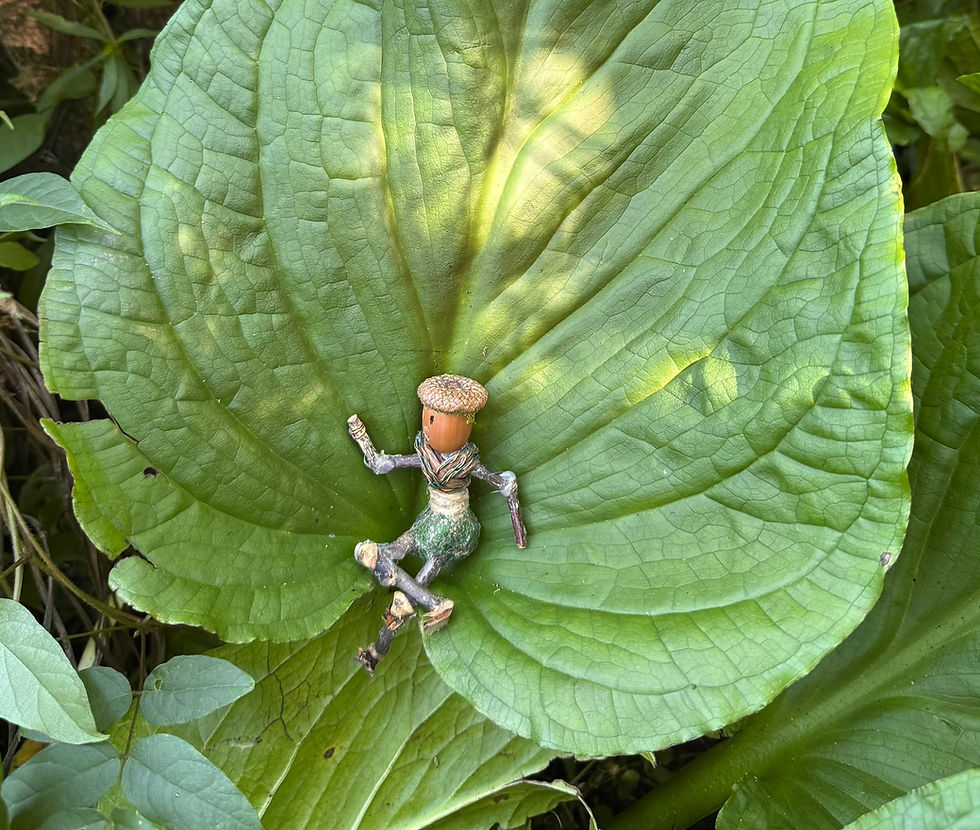
Other never before seen plants are Canadian burnet, California brome, Golden alexanders and Skunk cabbage (truly stinky when you rip a piece of leaf).
The Purplestem angelica is absolutely massive! The thick stem has a waxy coating and is hollow. You can see me sitting on it. It grows on average between 4 and 8 feet tall. Its strongly resembles poison hemlock (see S2E2). The flowers look like fireworks. So gorgeous.
Some regulars include autumn olive, basswood tree, false Solomon seal, eastern cottonwood seeds (pic that looks like a string of pearls) muscadine grape with a circle pattern of fungus, long style sweet root (the licorice tasting plant from S2E7)
Have you ever been to a fen, swamp or marsh? Have you ever seen a movie with one? Have you ever seen the movie Lord of the Rings with the dead marshes?


Comments